Friday, December 1, 2017

Medevac Workshop

Recently, I took a study break to attend a workshop sponsored by the Army on medevac training. While it's not likely an Army doctor would be participating in a field medevac, it's important for them to know what goes on before the patient arrives at the CSH. The workshop's purpose was to inspire students who are maybe considering a career in military medicine. We had a mock chopper, which my friends and I did make a few jokes about:

The 68W (medic) and surgical tech who taught the course were really patient and knowledgeable. They simulated multiple scenarios that we students had to work through, such as a soldier who fell off a rooftop and cracked ribs, or a civilian child who stepped on an IED.

After explaining the situations and showing us a medic kit, we were given a medic kit and a litter and told to get to work.

When I attended STEP, I participated in a similar simulation and really enjoyed it, so I was excited for this one, but I realized I really didn't understand the key differences between the civilian and military wounded evaluations.

For many of our situations, we could have still be under active fire, so if our patient was conscious,we were to give them their rifle and let them sustain enemies while we treated the patient. "Treated" is really a loose term - basically, we should check HBAC and then get the patient behind a vehicle, unit, or low wall -anything out of the line of fire.

"HBAC? I learned ABC?!"

So did I, and many civilian EMS services still practice ABC. But based on info gathered from combat casualty medical personnel, the military has moved towards HBAC. The following are the average amounts of time it would take to die from wounds traditionally seen on the battlefield (or in an traumatic setting like an active shooter or tornado damage).  

  • Hemorrhage (severe arterial bleeding as the result of penetrating trauma, ie. stab wound, bullet wound, penetration of a tree limb from a car wreck, etc): 1-3 minutes
  • Airway obstruction (blood/debris in the upper or lower airway occluding the passing of oxygen into the lungs): 4-5 minutes
  • Tension Pneumothorax (air leaking into the pleural space inside the chest causing cardiac arrest due to penetrating trauma, ie. stabbing): 10+ minutes
  • Shock (poor perfusion leading to organ failure and death, usually due to severe blood loss in victims that did not immediately die within the first 1-3 minutes). These 3 minutes are what's known as the 'golden hour'


HBAC -( hemmorage, breathing, airways, circulation)

Overall, I learned a great deal, and am super appreciative for this unique opportunity. Several of my friends participated in this activity with me, and we all feel like we learned a lot.

Saturday, October 7, 2017

Shadowing an OBGYN


In high school, I volunteered at a local hospital and worked at a pharmacy. I encountered Dr Fran at both these places and she always stood out among the other healthcare professionals. She was never too busy to say hello or interact with patients' families. So when it came time to shadow some physicians for my DHSS class, I knew it would be amazing to shadow her.

She graciously made time in her busy schedule for me to shadow her at the hospital and then at the clinic. Dr Fran is an OB-GYN, and I didn't really know much about obstetrics save what I watched on Call the Midwife, but she was so good at explaining things that I really learned a lot. An OB-GYN's scope of practice can be broken into two broad groups: obstetrics, which includes pregnancy, labor and delivery, and post-partum, and gynecology. Gynecology focuses on women's bodies and reproductive health. This could include issues such as endometriosis or painful intercourse. They see patients both in clinics and at hospitals.
Image result for call the midwife
Call the Midwife!

I can't tell too much about the cases I got to observe for HIPPA reasons, but they were all very diverse and interesting cases. I observed an ultrasound during which a lady learned the gender of her baby- super exciting! There was also a pregnant mother with syndactyly, or webbed fingers, a diabetic mother to be, and several post-partum checkups on teenage mothers. I saw pap tests, ultrasounds, and general check-ups. At the hospital I observed a dilation and cutlage, a uterine scrape for polyps. The diabetic mother was a really interesting case as I remembered watching an episode about it on Call the Midwife, and we've been learning about protein in urine in class.

Dr Fran treated each patient with dignity and friendliness, even when the patients weren't always respectful or nice. One teenaged patient played with her phone the entire time, ignored the doctor's questions, and seemed to not care. To be honest, this would have rattled me as a physician, but Dr Fran handled the situation well, giving the directions instead to the patient's mother and writing them out so they couldn't be ignored. I learned nearly as much about patient care as I did obstetrics! I also got to see the 'behind the scenes' and paperwork side of things. Overall, it was a great experience. I am so grateful to Dr Fran for her kindness in letting me shadow and being so willing to answer my questions. She couldn't have been any nicer and I learned so much!


Friday, August 11, 2017

going to Baylor

Well! It's good to be back. While working towards applying to college, I ran across several really helpful pre-med blogs. They inspired me to resurrect my personal blog, which I started as a tween in 2011. I hope to chronicle some of my adventures as a pre-med student and maybe help/inspire someone else in their college journey. Here, have a very school spirit-y picture:

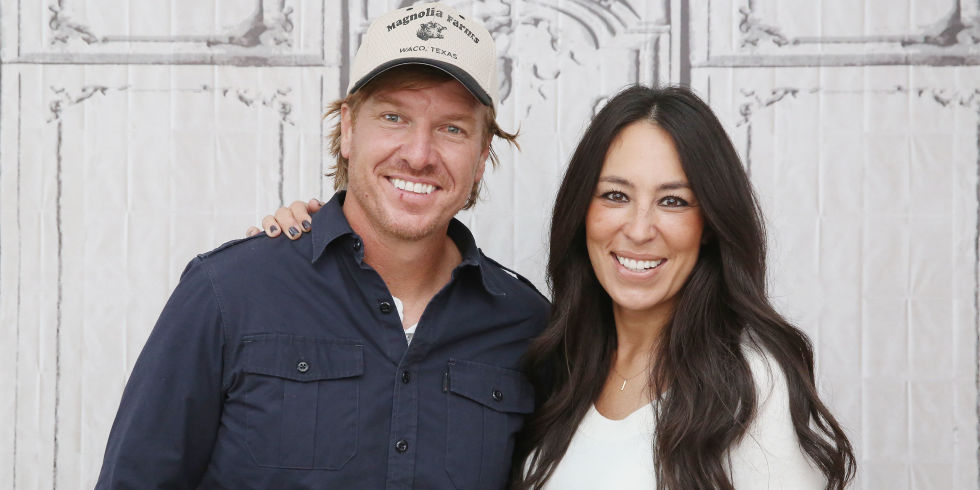
Right now, I'm preparing to begin my freshman year at Baylor University in Waco. If you watch HGTV, you've probably heard of us thanks to these guys:
(Chip and Joanna Gaines from the TV show Fixer Upper) Who knew Waco would become so cool? It's really a fun place, and there's lots of great restaurants and shops in addition to a small town vibe.

I still can't believe it has been a year since I applied to college. It seems like just a moment ago I was buying up ACT books and running from my job to dual credits to college applications. Being homeschooled created some difficulties when it came to counselor's letters and school VOEs, but it also really helped me face the college process independently. I was so terrified of not getting in anywhere. When the acceptance letters started coming, it was a great feeling to know that I had applied to college entirely on my own. I am SO grateful to God for giving me the opportunity to go to college.

I'm majoring in pre-health science studies (basically pre-med) and I can't wait for move in.

Thanks for following along!